
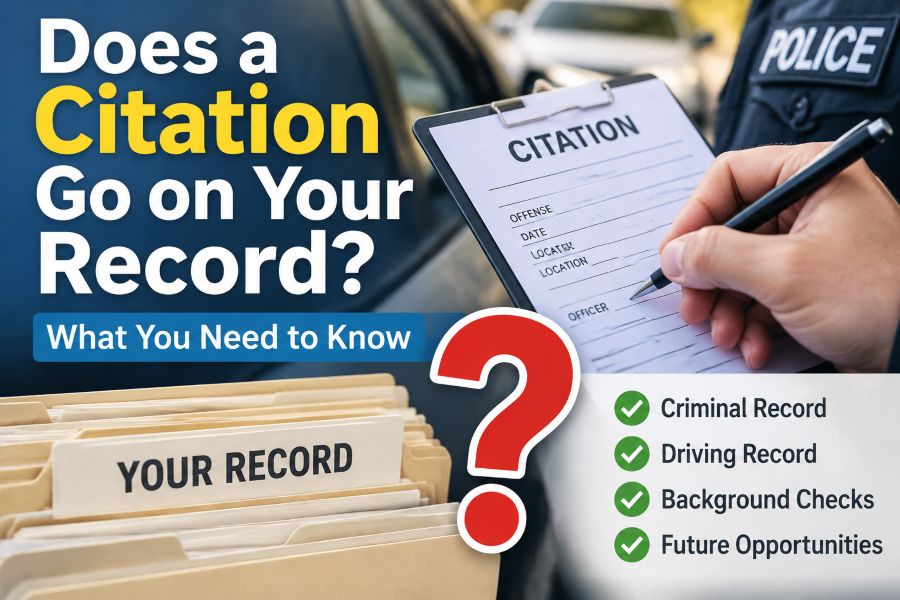
When someone receives a citation, one of the first questions they usually ask is: “Does a citation go on your record?” Many people are unsure whether a citation is the same as a criminal record, whether employers can see it, or how it can affect their future.
The answer depends on the type of citation, the laws in your location, and whether the citation results in a conviction. Some citations may become part of a public record, while others may only appear in specific databases or court systems.
Understanding how citations work can help you make informed decisions and know what steps to take after receiving one.
What Is a Citation?
A citation is an official notice issued by a law enforcement officer or government authority stating that someone allegedly violated a law, regulation, or ordinance. Instead of being arrested, the person is usually given a written document explaining the violation and the required next steps.
Citations are commonly issued for minor offenses such as:
- Traffic violations
- Parking violations
- Noise complaints
- Public behavior violations
- Local ordinance violations
- Certain civil infractions
A citation typically includes important information such as:
- The person’s name
- The alleged violation
- Date and location of the incident
- Court appearance information (if required)
- Fine amount or penalties
Although citations are often considered less serious than arrests or criminal charges, many people worry about whether they create a permanent record.
Does a Citation Go on Your Record?
The short answer is: sometimes, yes.
Whether a citation appears on your record depends on the kind of citation you received.
A traffic citation, criminal citation, and civil citation are treated differently. Some citations may appear on driving records, while others may appear in court records or background checks.
For example:
- A speeding ticket may appear on your driving record.
- A criminal citation may appear on a court record.
- A parking ticket usually does not appear on a criminal record.
- A dismissed citation may have limited visibility depending on local laws.
A citation itself does not always mean you have a criminal record. In many cases, only a conviction after a court process creates a criminal record.
Is a Citation the Same as a Criminal Record?
No. A citation and a criminal record are not the same thing.
A criminal record generally refers to documented information about criminal charges, convictions, or legal outcomes involving criminal offenses.
A citation is simply an allegation that a violation occurred. Receiving a citation does not automatically mean you are guilty.
The legal process usually works like this:
- An officer issues a citation.
- The person may pay a fine or appear in court.
- The court reviews the case.
- A decision is made.
- The outcome determines whether it becomes part of a record.
If the citation is dismissed or resolved without a conviction, it may not affect your criminal history in the same way as a conviction.
Types of Citations and How They Affect Your Record
Different types of citations have different consequences.
Traffic Citations
Traffic citations are among the most common types of citations.
Examples include:
- Speeding tickets
- Running a red light
- Failure to stop
- Improper lane changes
- Driving without proper documentation
Traffic citations usually affect your driving record rather than your criminal record.
A traffic violation may impact:
- Insurance rates
- Driver license status
- Driving history reports
Serious traffic offenses, however, may have additional consequences.
Civil Citations
Civil citations usually involve non-criminal violations.
Examples include:
- Building code violations
- Noise violations
- Certain local ordinance violations
These generally result in fines rather than criminal penalties.
A civil citation may become part of a government or court record, but it usually does not create a criminal record.
Criminal Citations
A criminal citation is more serious because it involves an alleged criminal offense.
Examples may include:
- Minor theft
- Disorderly conduct
- Certain alcohol-related offenses
- Other misdemeanor-level violations
A criminal citation may appear in court records and could affect background checks depending on the outcome.
Will a Citation Show Up on a Background Check?
Whether a citation appears on a background check depends on several factors.
Background checks may search different sources, including:
- Criminal court records
- Public records databases
- Driving records
- Employment screening databases
A minor traffic ticket may not appear on a standard criminal background check because it is not considered a criminal offense.
However, criminal citations may appear if they are recorded in court systems.
Employers usually focus on convictions rather than simple allegations, but rules vary depending on location and the type of job.
Do Police Keep Records of Citations?
Yes, law enforcement agencies generally keep records of citations they issue.
These records help agencies:
- Track violations
- Maintain legal documentation
- Manage court processes
- Monitor repeated offenses
However, the existence of a police record does not always mean the information is part of a criminal history.
The type of record and how long it is maintained depends on local regulations.
Does Paying a Citation Mean You Have a Record?
Paying a citation can have different effects depending on the type of violation.
For many traffic citations, paying the fine is considered accepting responsibility for the violation. This may result in the violation being recorded on your driving history.
For other citations, payment may resolve the matter without creating a criminal conviction.
Before paying, it is important to understand:
- What type of citation you received
- Whether payment counts as a guilty plea
- Whether the violation affects your record
- Whether you have options to contest it
How Long Does a Citation Stay on Your Record?
The length of time a citation remains on a record depends on:
- The type of citation
- Local laws
- Whether it resulted in a conviction
- Record retention policies
Examples:
- Traffic violations may remain on driving records for several years.
- Court records may remain available for longer periods.
- Criminal convictions may remain permanently unless eligible for expungement.
Because laws vary widely, checking your local rules is the best way to understand your situation.
Can You Remove a Citation From Your Record?
In some situations, a citation may be removed, sealed, or cleared.
Possible options include:
Contesting the Citation
If you believe the citation was issued incorrectly, you may challenge it in court.
If the court dismisses the citation, it may reduce its impact on your record.
Expungement or Record Clearing
Some jurisdictions allow eligible records to be sealed or expunged.
Eligibility may depend on:
- Type of offense
- Time passed since the violation
- Whether there were additional offenses
- Final case outcome
Defensive Driving Programs
Some traffic citations may qualify for programs that prevent points from being added to your driving record.
Availability depends on local regulations.
Does a Citation Affect Employment Opportunities?
A citation does not automatically prevent someone from getting a job.
However, the impact depends on:
- The type of citation
- The employer’s screening process
- Industry requirements
- Whether there was a conviction
For example, a minor parking ticket is unlikely to affect employment decisions.
A criminal citation involving a conviction may receive more attention, especially for jobs involving:
- Security
- Government access
- Transportation
- Financial responsibilities
Being honest when required and understanding your legal record can help avoid complications.
Does a Citation Affect Immigration Status?
For non-citizens, citations may require additional attention.
Not every citation affects immigration status, but certain criminal matters can create complications.
Immigration decisions often consider:
- Type of offense
- Legal outcome
- Court records
- Immigration laws
Anyone concerned about immigration consequences should consult a qualified legal professional.
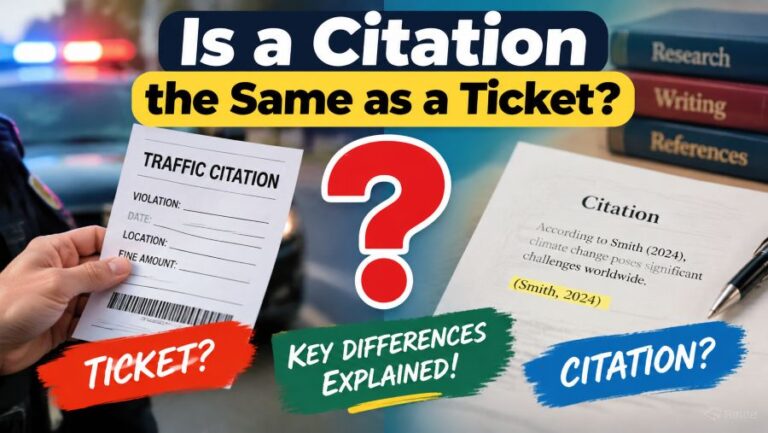
Citation vs Ticket: What Is the Difference?
Many people use the words “citation” and “ticket” interchangeably.
In everyday conversations, they often mean the same thing. A speeding ticket is technically a type of citation because it informs someone about an alleged violation.
However, the term citation can refer to a broader range of legal notices.
A ticket usually refers specifically to traffic-related violations, while a citation may involve traffic, civil, or criminal matters.
What Should You Do After Receiving a Citation?
If you receive a citation, consider these steps:
Read the Citation Carefully
Check:
- The violation listed
- Required court date
- Payment deadline
- Instructions provided
Do Not Ignore It
Ignoring a citation can lead to additional penalties, including:
- Extra fines
- Court issues
- License problems
Understand Your Options
Depending on the situation, you may be able to:
- Pay the fine
- Attend court
- Request a hearing
- Challenge the citation
Keep Documentation
Save:
- The citation copy
- Payment receipts
- Court documents
- Communication records
These documents may be useful later.
Frequently Asked Questions About Citations and Records
Does a citation mean I have a criminal record?
No. A citation does not automatically create a criminal record. It depends on the type of citation and the final legal outcome.
Does a traffic citation appear on my record?
A traffic citation may appear on your driving record, especially if it results in a conviction or payment of the fine.
Can employers see citations?
Some citations may appear during background checks, especially criminal citations. Traffic and minor civil citations are usually handled differently.
Is a citation worse than a ticket?
A ticket is generally a type of citation. The seriousness depends on the violation involved.
Can a dismissed citation still appear?
A dismissed citation may still exist in court records, but its impact depends on local laws and record access rules.
Final Thoughts: Does a Citation Go on Your Record?
So, does a citation go on your record? The answer depends on the citation type and what happens afterward.
Some citations become part of driving records, court records, or public databases, while others have little long-term impact. A citation is not automatically the same as a criminal record, and receiving one does not always mean you have a permanent legal problem.
The most important steps are understanding the citation, responding on time, and learning how your local laws handle different violations.
Knowing your rights and responsibilities can help you protect your record and avoid unnecessary consequences.



Comments
0 responsesNo comments yet. Be the first to share your thoughts.