
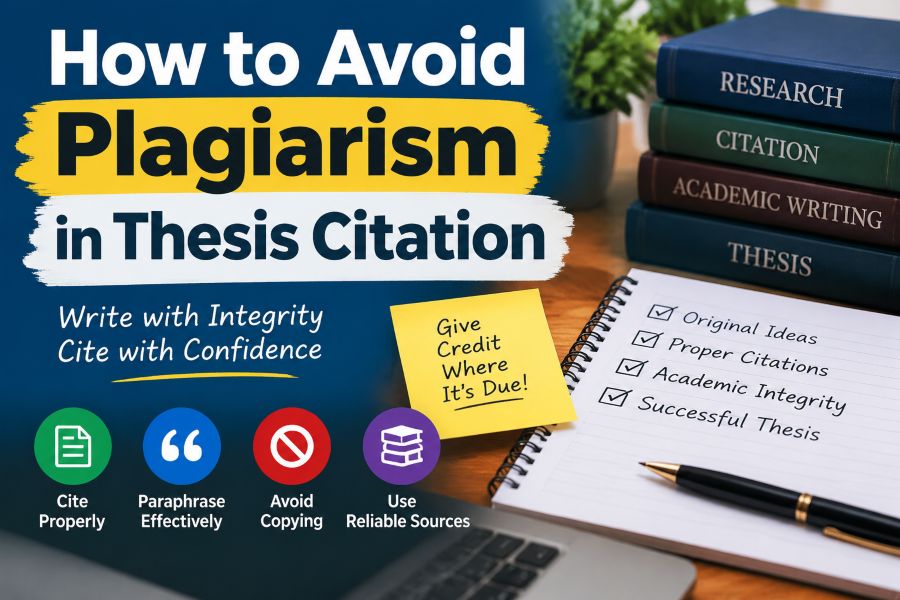
Writing a thesis requires extensive research, critical thinking, and the ability to present original ideas. One of the biggest challenges students and researchers face during academic writing is avoiding plagiarism, especially when using citations, references, and information from existing sources.
Many students assume that adding citations automatically prevents plagiarism. However, incorrect citation practices, missing references, improper paraphrasing, and accidental copying can still lead to plagiarism issues. Understanding how to properly use citations is essential for maintaining academic integrity and producing a credible thesis.
This guide explains how to avoid plagiarism in thesis citation, including effective citation techniques, paraphrasing strategies, reference management tips, and common mistakes to avoid.
What Is Plagiarism in a Thesis?
Plagiarism is the act of using someone else’s ideas, words, research findings, or academic work without giving proper credit. In thesis writing, plagiarism can occur when a researcher copies text, uses another person’s arguments, or presents existing research as their own.
Plagiarism does not always involve intentional copying. Many students commit accidental plagiarism because they misunderstand citation rules or fail to properly track their sources.
Common examples of thesis plagiarism include:
- Copying sentences from research papers without quotation marks
- Using another researcher’s ideas without citation
- Paraphrasing too closely to the original source
- Forgetting to include references in the bibliography
- Using data, statistics, or images without credit
- Reusing parts of previous academic work without permission
Academic institutions take plagiarism seriously because research depends on originality, transparency, and ethical practices.
Why Proper Citation Is Important in Thesis Writing
Citations are an essential part of academic research because they show where information comes from. Proper citations help readers verify sources, understand the foundation of your research, and recognize the contributions of other scholars.
Using citations correctly helps you:
1. Maintain Academic Integrity
A thesis represents your own research abilities. Proper citations demonstrate honesty and respect for other researchers’ work.
2. Support Your Arguments
Academic claims become stronger when supported by reliable studies, theories, and evidence from previous research.
3. Avoid Plagiarism Accusations
Correct citations clearly separate your original ideas from borrowed information.
4. Build Research Credibility
A well-referenced thesis shows that you have conducted thorough research and understand existing academic discussions.
Understand Different Types of Plagiarism in Citations
To effectively avoid plagiarism, you need to understand the different ways citation-related plagiarism can happen.
Direct Plagiarism
Direct plagiarism occurs when you copy someone’s exact words without providing proper attribution.
Example:
Original source:
Climate change significantly affects global agricultural productivity.
Plagiarized version:
Climate change significantly affects global agricultural productivity.
If you use this sentence, you must either:
- Put it inside quotation marks and cite the source
- Rewrite it completely in your own words and cite the original idea
Incorrect Paraphrasing
Paraphrasing means rewriting information using your own words while keeping the original meaning. Simply changing a few words is not enough.
Example:
Original:
Artificial intelligence has transformed modern educational systems by improving personalized learning.
Poor paraphrase:
Artificial intelligence has changed modern education systems by improving personalized learning.
Although some words changed, the structure and meaning remain too similar.
A proper paraphrase should restructure the sentence completely while still citing the source.
Missing Citations
Sometimes students include information from a source but forget to add a citation. Even if the information is common in academic literature, failing to acknowledge the source can create plagiarism concerns.
Self-Plagiarism
Self-plagiarism happens when researchers reuse their previous academic work without proper acknowledgment.
Examples:
- Copying sections from an old assignment into a thesis
- Republishing previous research without disclosure
- Reusing your own published content without citation
Your previous work may belong to you, but academic rules still require transparency.
How to Avoid Plagiarism in Thesis Citation
Following proper research and citation practices can help you create an original and academically acceptable thesis.
1. Start With Proper Research Notes
One of the easiest ways plagiarism happens is poor note-taking.
During research, clearly separate:
- Your own ideas
- Direct quotations
- Summaries
- Paraphrased information
- Source details
A good note-taking system should include:
- Author name
- Publication year
- Article or book title
- Page numbers
- Website or journal information
- Important quotes
Keeping accurate records prevents confusion when writing your thesis later.
2. Learn Your Required Citation Style
Different academic institutions require different citation formats.
Common citation styles include:
APA Style
Frequently used in:
- Psychology
- Education
- Social sciences
Example:
(Author, Year)
MLA Style
Common in:
- Literature
- Humanities
- Language studies
Example:
(Author Page Number)
Chicago Style
Used in:
- History
- Arts
- Some academic research fields
Chicago style includes:
- Notes and bibliography system
- Author-date system
Before writing your thesis, confirm which citation style your university requires.
3. Always Cite Ideas, Not Only Exact Words
Many students think citations are only required when copying sentences. However, ideas, theories, arguments, and research findings also require acknowledgment.
You should cite a source when you:
- Use another researcher’s theory
- Mention research results
- Discuss someone’s argument
- Include statistics
- Refer to a specific study
Example:
Incorrect:
Social media affects consumer purchasing behavior.
Correct:
Social media influences consumer purchasing behavior by shaping brand awareness and customer decisions (Smith, 2024).
The citation shows where the idea originated.
4. Use Quotation Marks for Direct Quotes
When using exact words from another source, quotation marks are required.
Example:
According to Johnson (2023), “digital transformation requires organizations to rethink traditional business processes.”
The quotation marks indicate that these words belong to the original author.
Remember:
- Short quotes usually use quotation marks
- Long quotes may require block formatting depending on citation style
Always include:
- Author
- Year
- Page number (when required)
5. Practice Proper Paraphrasing
Paraphrasing is one of the most important skills for avoiding plagiarism.
A good paraphrase involves:
- Reading the original source carefully
- Understanding the meaning
- Writing the idea from memory
- Comparing with the original
- Adding citation information
Avoid:
- Replacing only a few words
- Keeping the same sentence structure
- Copying phrases without quotation marks
Good paraphrasing maintains the original meaning while creating a new expression.
6. Use Citation Management Tools
Managing dozens or hundreds of references manually can increase mistakes.
Citation management tools help organize sources and automatically create references.
Popular tools include:
- Zotero
- Mendeley
- EndNote
- RefWorks
Benefits include:
- Storing research sources
- Creating citations automatically
- Formatting bibliographies
- Reducing citation errors
Using these tools can save time and improve accuracy.
7. Keep a Reference List While Writing
Do not wait until the end of your thesis to create references.
Add sources immediately when you use them.
A complete reference list should include:
- Every source cited in the thesis
- Correct formatting
- Complete publication information
A missing reference can make properly cited information appear incomplete.
8. Use Plagiarism Detection Tools
Before submitting your thesis, check your work using plagiarism detection software.
These tools identify:
- Similar phrases
- Duplicate content
- Missing citations
- Possible plagiarism risks
Popular plagiarism checking tools include:
- Turnitin
- iThenticate
- Grammarly plagiarism checker
- Quetext
However, plagiarism tools should not replace proper citation knowledge. They only help identify possible issues.
9. Avoid Copying From Multiple Sources Without Analysis
A thesis should not simply combine information from different papers.
Researchers expect you to:
- Analyze previous studies
- Compare different viewpoints
- Develop your own arguments
Instead of writing:
Researcher A found this. Researcher B found this. Researcher C found this.
Create connections:
Previous studies indicate different perspectives on this issue. While Researcher A emphasizes technological factors, Researcher B highlights social influences.
Your analysis demonstrates originality.
10. Cite Images, Tables, and Data Properly
Plagiarism is not limited to written text.
You must also cite:
- Charts
- Graphs
- Images
- Tables
- Research datasets
If you use visual information created by someone else, provide proper attribution.
Common Citation Mistakes That Cause Plagiarism
Many students face plagiarism problems because of simple citation errors.
Mistake 1: Adding Citations at the End of a Paragraph
A citation at the end of a paragraph may not clearly show which statement it supports.
Better approach:
Place citations immediately after the borrowed idea.
Mistake 2: Overusing Direct Quotes
A thesis should demonstrate your understanding, not simply repeat other researchers’ words.
Use quotations only when:
- The original wording is important
- A definition needs exact wording
- The author’s statement is significant
Mistake 3: Forgetting Page Numbers
Some citation styles require page numbers for direct quotations.
Always check your required format.
Mistake 4: Citing Unreliable Sources
Avoid using:
- Unknown websites
- Unsourced articles
- Random online content
Academic research should rely on trustworthy sources.
How to Check Your Thesis Before Submission
Before submitting your thesis, complete a plagiarism review checklist.
Ask yourself:
Have I cited every borrowed idea?
Review each chapter and identify information from external sources.
Are direct quotes properly formatted?
Check quotation marks and citation details.
Are paraphrases written in my own words?
Compare rewritten sections with original sources.
Does every citation appear in the reference list?
Ensure all sources are included.
Have I followed my university’s citation guidelines?
Confirm formatting requirements.
Benefits of Writing a Plagiarism-Free Thesis
A properly cited thesis provides several advantages:
Higher Academic Quality
Original research demonstrates strong analytical ability.
Better Research Reputation
Accurate citations show professionalism and responsibility.
Improved Publication Opportunities
Researchers with ethical writing practices have better chances of publishing their work.
Avoid Academic Penalties
Proper citation protects students from disciplinary actions.
Final Thoughts: Mastering Thesis Citation Without Plagiarism
Learning how to avoid plagiarism in thesis citation is an essential skill for every student and researcher. Proper citation is not only about following formatting rules; it is about respecting intellectual contributions and building trustworthy academic work.
The best way to prevent plagiarism is to develop good research habits, maintain accurate notes, understand citation styles, paraphrase correctly, and review your work before submission.
A strong thesis combines existing knowledge with your own insights. By using citations responsibly, you can create research that is original, credible, and academically valuable.
Remember, citations do not weaken your work—they strengthen it by showing that your ideas are connected to reliable research while maintaining academic honesty.
Comments
0 responsesNo comments yet. Be the first to share your thoughts.